
Click on each picture for a LARGER view
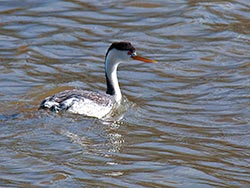
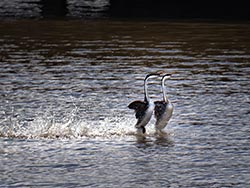
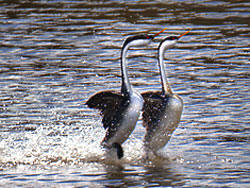
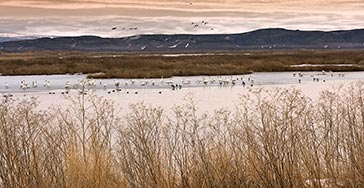
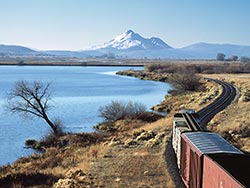
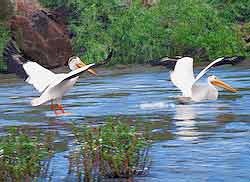
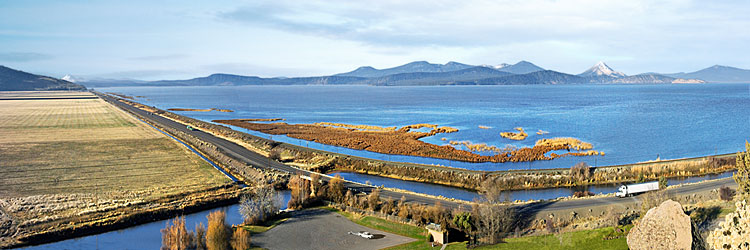
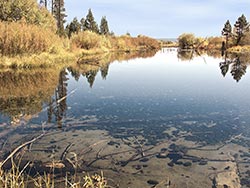
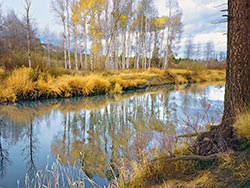
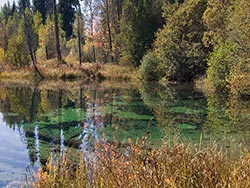
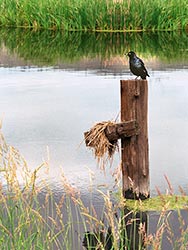
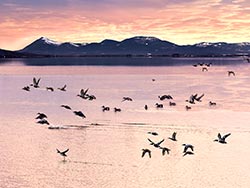
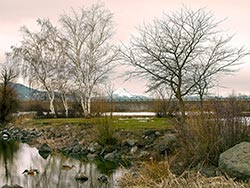
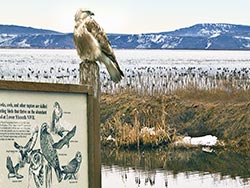
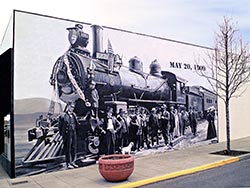
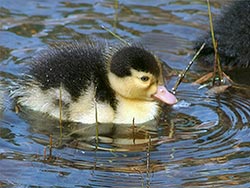
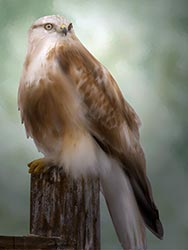
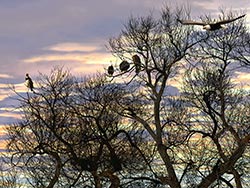
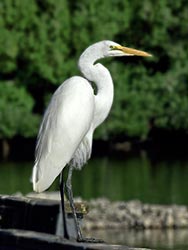
This gallery is of features of the Klamath
Basin area.
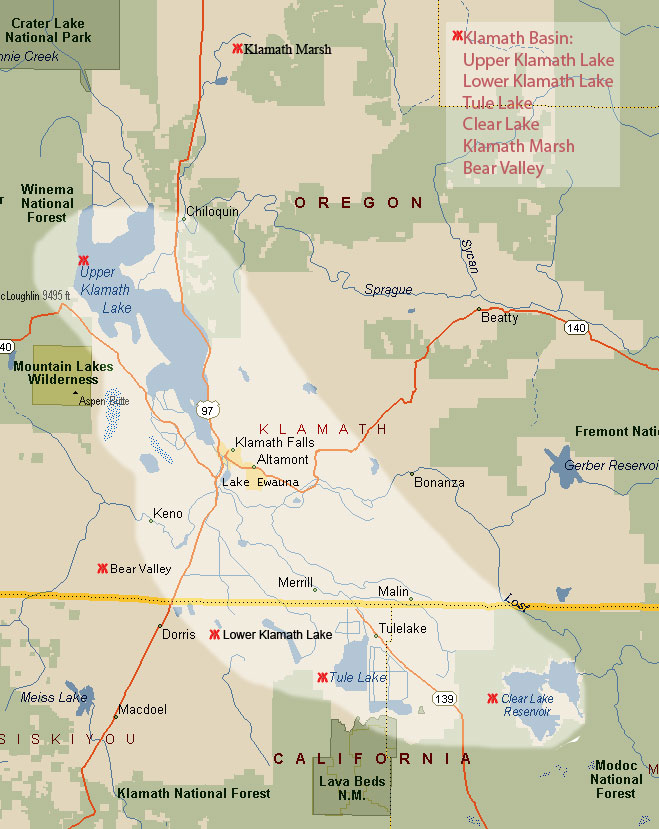
The Klamath Basin
Natural Wildlife Refuge, situated on the Oregon California border, includes
Upper Klamath Lake,
Lower Klamath
Lake, Tule Lake, Clear Lake, Klamath Marsh,
and Bear Valley. This area was once huge...185,000 acres...and supported
6 million feathered guests in fall. In 1905, the water from these
shallow lakes and fresh water marshes was diverted
to agricultural use, stripping 3/4 of the bounty from wildlife.
It became the task of the US Fish & Wildlife Service to coordinate
the available water supply...to ensure survival of wildlife (the
Snowy Egret, the tiny muscovy,
the clever falcon) and human life.
Early in 2001 the
water of Upper Klamath Lake was sent to salmon spawning areas rather than
pumped into irrigation pipes. Not only farmers were effected.
The water that normally flowed to Tule Lake from Upper Klamath was so
reduced they could no longer pump water to Lower Klamath Lake and it dried
up completely. After 6-7 years of changes in policy and weather,
the bird population is beginning to stabilize;
the American White Pelican has a home. This
area hosts the largest concentration of bald eagles
in the continental United States!
In the late 1800's.
Klamath Falls (and it's subs Olene and
Bonanza) was too remote for its agricultural and
forest products to reach markets.
Then, in 1909, the Southern Pacific Railroad arrived at Klamath
Falls heralding a boomtown atmosphere that lasted till the Great
Depression.
When in South Central
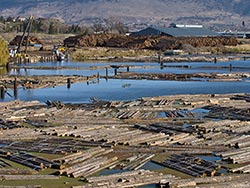
Oregon, watch for a passel of logs floating
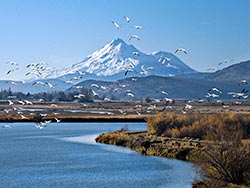
in Lake Ewauna, a gaggle of Snow Geese taking flight, and Cascades Mountain
tops
(Mt Shasta, Mt McLoughlin)
painting the distant sky.
Your vigilance will be worth it!

Copyright 2008
Strength in Perspective
All Rights Reserved
Last Updated 7-11-2023
 Back to Home Page