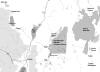
Click on each picture for a LARGER view
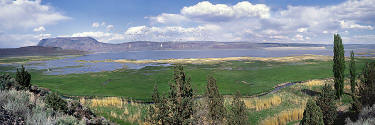
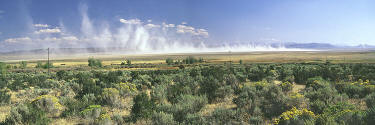
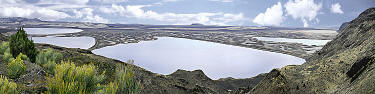
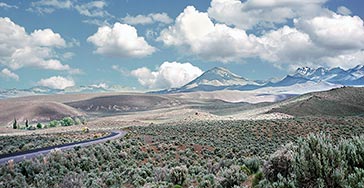
This Gallery is
about the area called the "Empty
Quarter", the Oregon Basin, part of the *Hydrographic Great
Basinof the United States, is among the most sparcely-inhabitated
areas of Oregon. It is not one but several basins with similar characteristics.
There's Harney Basin, Silver Lake Basin, Warner Basin, Goose
Lake Basin, Catlow-Pueblo-Alvord Basin, and Summer Lake-Abert
Lake Basin.
In all the basins, the land has fractured allowing
one area to rise abruptly and the rest to settle into a flat plateau.
These striking variations in landscape are called horst and graben or
quick rising mountains and very flat valleys.
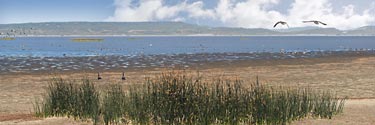
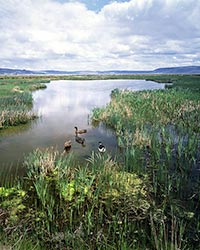
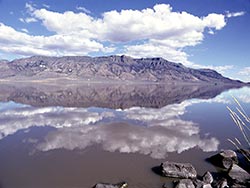
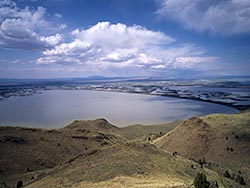
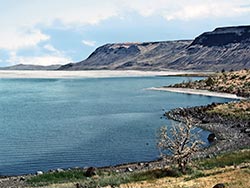
The Oregon Basin also includes remnants of prehistoric
lakes which are now shallow, salty lakes which can't grow fish but
do grow brine shrimp for migratory fowl. These "playa lakes"
are in the flat basins and have no outlet. Geological
Faulting through time has obstructed their seaward path. Hot
summers dry the precipitation which falls as snow...then in spring it
melts temporarily filling the playa lakes. The result? Salt!
Abert Lake has the distinction of being the third
largest salt lake in North America!
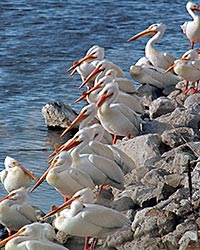
Slightly salty lakes, such as
Crump Lake and
Campbell
Lake of the Warner Basin ,
Goose Lake, or
Summer Lake are excellent stop overs for migratory
birds.
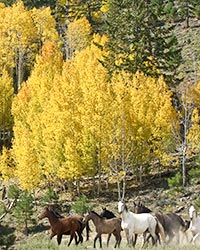
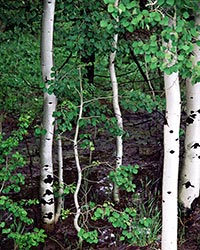
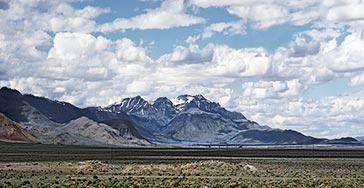
The Steens Mountain, rich
with Aspen Trees, is a raised fault-block mountain
of 9773ft and is a "horst". The Alvord Basin,
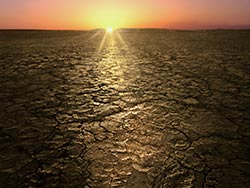
the flat adjacent area is a "graben". The Alvord Desert rests
4000' above sea level and is in the rainshadow of the nearby Steens
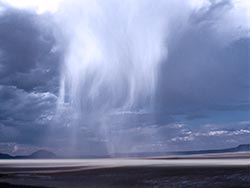
Mountain so it's a barren desert floor of dried caked mud.(white rhyolyte) The Alvord gets about 9" rain/year, to be there
during a rainstorm is a unique treat.
The Alvord is alkaline and supports
little vegetation except sagebrush which is fairly good as
cattle, antelope, and deer food. The Pueblo Mountains
near Fields (spring board to the dusty Alvord Desert)
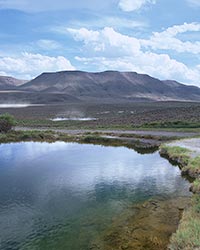
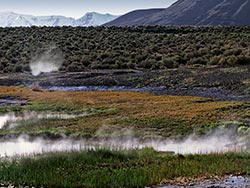
is made up of two fault block ranges. Hot springs
of bubbling, steaming Water also punctuate
the desert. These springs start several thousand feet below the surface
and begin their trip upward at 220 degrees!
The Hart Mountain National
Antelope Refuge (established in 1936) is located
on another horst (ie fault block ridge). Hart
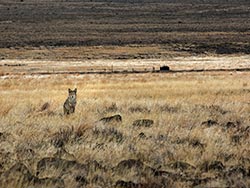
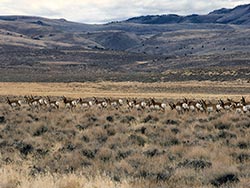
Mountain is in south-central Oregon and is visited by antelope herds
and the coyote that enjoys their taste. Predation
is so severe by coyotes that fawn survival has fallen drastically.
When cattle were allowed to graze the refuge, the
coyote problem was less severe as the antelope would birth their
fawns amid the cattle herd for protection. In 1991 cattle were no
longer allowed on the refuge...gone is the shield!
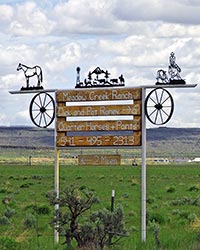
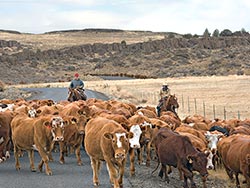
Ever since
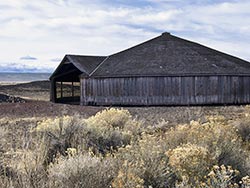
Pete French built his round barn (to break horses
for herding) there have been large cattle ranches in the area and self
sufficient cattle folk to tend them. Cattle andcraters populate the area.
Diamond Craters is
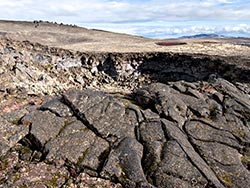
a 60 sq mile basaltic lava flow between Burns and Steens Mountain.
East of Diamond wild horses ! Seeing
an Alvord Sunrise is why this area is part
of the GREAT basin!
Copyright 2007
Strength in Perspective
All Rights Reserved
Last Updated 7-11-2023
 Back to Home Page